
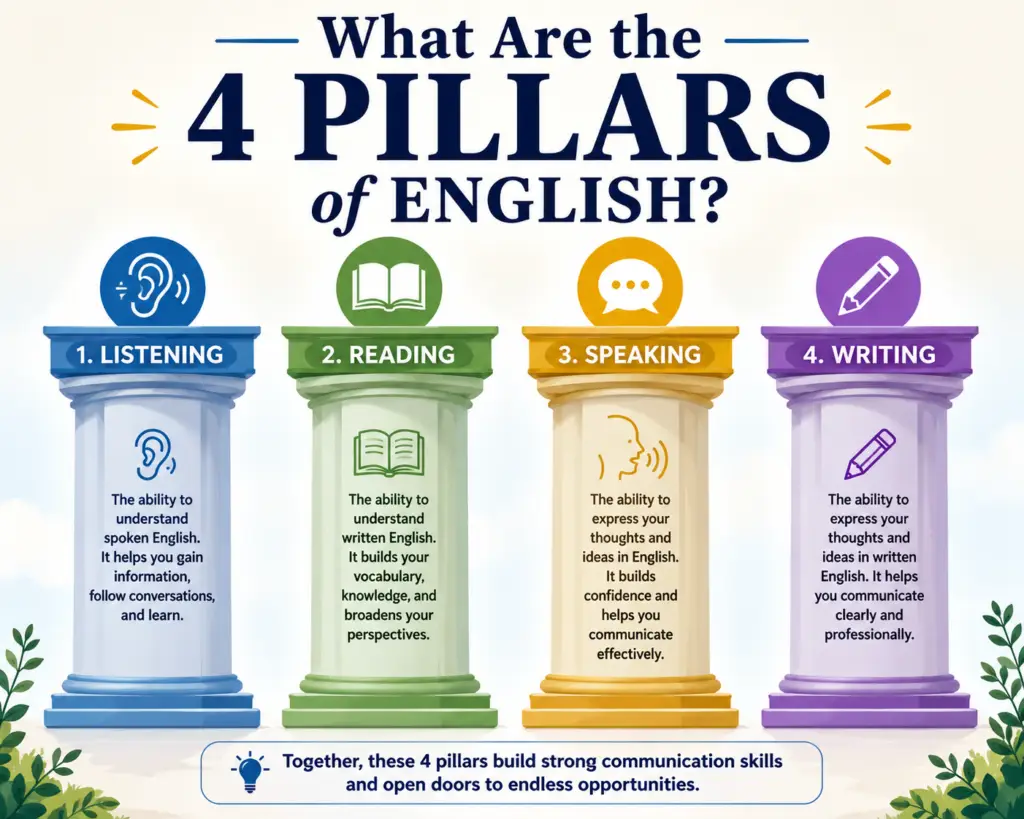
English is one of the most widely spoken languages in the world and plays a crucial role in education, business, communication, and career development. Whether you are a student, a professional, or someone learning English as a second language, understanding the four pillars of English can help you build a strong foundation and improve your overall language proficiency.
The four pillars of English are Listening, Speaking, Reading, and Writing. These core language skills work together to help individuals communicate effectively and confidently in different situations. Mastering these pillars is essential for academic success, professional growth, and everyday communication.
1. Listening: The Foundation of Understanding
Listening is the first pillar of English and one of the most important language skills. It involves understanding spoken words, accents, pronunciation, and context. Strong listening skills help learners comprehend conversations, lectures, presentations, and media content.
Why Listening Is Important
- Improves understanding of spoken English.
- Helps learners develop correct pronunciation.
- Builds vocabulary through exposure to new words.
- Enhances communication and interaction skills.
- Supports the development of speaking abilities.
How to Improve Listening Skills
- Listen to English podcasts regularly.
- Watch English movies and TV shows with subtitles.
- Practice listening to native speakers.
- Engage in conversations with English-speaking individuals.
- Take notes while listening to lectures or presentations.
The more learners expose themselves to spoken English, the easier it becomes to understand different accents and communication styles.
2. Speaking: Expressing Ideas Effectively
Speaking is the second pillar of English and focuses on verbal communication. It allows individuals to express their thoughts, opinions, and ideas clearly. Good speaking skills are essential for classroom discussions, interviews, presentations, meetings, and social interactions.
Benefits of Strong Speaking Skills
- Builds confidence in communication.
- Improves fluency and pronunciation.
- Enhances professional and academic performance.
- Encourages effective participation in discussions.
- Strengthens interpersonal relationships.
Tips for Improving Speaking Skills
- Practice speaking English daily.
- Join conversation groups or language clubs.
- Record yourself speaking and analyze your pronunciation.
- Learn common phrases and expressions.
- Focus on clarity rather than speed.
Many English learners understand the language well but hesitate to speak. Consistent practice helps overcome fear and improves fluency over time.
3. Reading: Expanding Knowledge and Vocabulary
Reading is the third pillar of English and involves understanding written texts. It helps learners gain knowledge, improve comprehension, and develop a broader vocabulary. Reading is essential for academic learning, professional development, and personal growth.
Importance of Reading
- Enhances vocabulary and grammar understanding.
- Improves comprehension skills.
- Develops critical thinking abilities.
- Increases general knowledge.
- Strengthens writing skills through exposure to proper sentence structures.
Effective Ways to Improve Reading Skills
- Read books, newspapers, and articles regularly.
- Choose materials appropriate to your skill level.
- Learn the meaning of unfamiliar words.
- Practice summarizing what you read.
- Read a variety of content, including fiction and non-fiction.
Reading consistently exposes learners to different writing styles, sentence patterns, and vocabulary, helping them become more proficient in English.
4. Writing: Communicating Through Words
Writing is the fourth pillar of English and involves expressing ideas in a structured and organized manner. Strong writing skills are important for academic assignments, professional communication, reports, emails, and creative expression.
Why Writing Matters
- Improves grammar and sentence construction.
- Helps organize thoughts clearly.
- Enhances professional communication.
- Supports academic success.
- Develops critical and analytical thinking skills.
Strategies for Better Writing
- Practice writing regularly.
- Learn grammar and punctuation rules.
- Read extensively to observe writing styles.
- Review and edit your work.
- Expand your vocabulary for more effective expression.
Writing allows learners to communicate complex ideas clearly and professionally. Regular practice is essential for developing accuracy and confidence.
How the Four Pillars Work Together
The four pillars of English are interconnected. Improvement in one skill often supports the development of the others.
For example:
- Listening improves speaking by exposing learners to correct pronunciation and sentence structures.
- Reading strengthens writing through exposure to vocabulary and grammar.
- Speaking reinforces listening through active communication.
- Writing helps organize thoughts, making verbal communication clearer.
A balanced approach that focuses on all four pillars leads to overall language proficiency and effective communication.
The Importance of the Four Pillars in Education
Students rely on all four pillars to succeed academically. Listening helps them understand lectures, reading supports learning, writing enables assignment completion, and speaking allows participation in discussions and presentations.
Educational institutions often assess students based on these four core skills because they represent a complete understanding of the language.
The Role of the Four Pillars in Professional Success
In the workplace, English proficiency is highly valued. Professionals use the four pillars daily:
- Listening during meetings and training sessions.
- Speaking during presentations and client interactions.
- Reading reports, emails, and industry documents.
- Writing emails, proposals, and reports.
Strong English skills can improve career opportunities, workplace communication, and professional credibility.
Common Challenges Learners Face
Many English learners encounter difficulties while developing these skills.
Listening Challenges
- Understanding different accents.
- Following fast-paced conversations.
- Recognizing unfamiliar vocabulary.
Speaking Challenges
- Fear of making mistakes.
- Lack of confidence.
- Limited vocabulary.
Reading Challenges
- Complex texts and unfamiliar words.
- Slow reading speed.
- Difficulty understanding context.
Writing Challenges
- Grammar mistakes.
- Poor sentence structure.
- Limited vocabulary usage.
The key to overcoming these challenges is consistent practice, patience, and regular exposure to the language.
Tips for Mastering All Four Pillars
To develop strong English skills, learners should:
- Practice English every day.
- Create a balanced study plan covering all four skills.
- Read and listen to authentic English content.
- Engage in regular conversations.
- Keep a vocabulary journal.
- Write daily, even if only for a few minutes.
- Seek feedback from teachers or language partners.
- Use online learning resources and language apps.
Consistency is more important than intensity. Small daily efforts often lead to significant long-term improvement.
Conclusion
The four pillars of English Listening, Speaking, Reading, and Writing form the foundation of effective language learning and communication. Each pillar plays a unique role in helping learners understand, express, and interact confidently in English. By focusing on all four skills equally, students and professionals can improve their fluency, build confidence, and achieve greater success in academic, personal, and professional environments.
Mastering these pillars takes time and dedication, but with regular practice and the right learning strategies, anyone can develop strong English language skills and become a confident communicator.