
English is one of the most widely spoken languages in the world. Whether you are a student, professional, job seeker, or someone preparing for exams like IELTS, strong English speaking skills can open doors to better education, career opportunities, and international communication. However, becoming a confident English speaker requires more than just learning grammar rules and vocabulary.
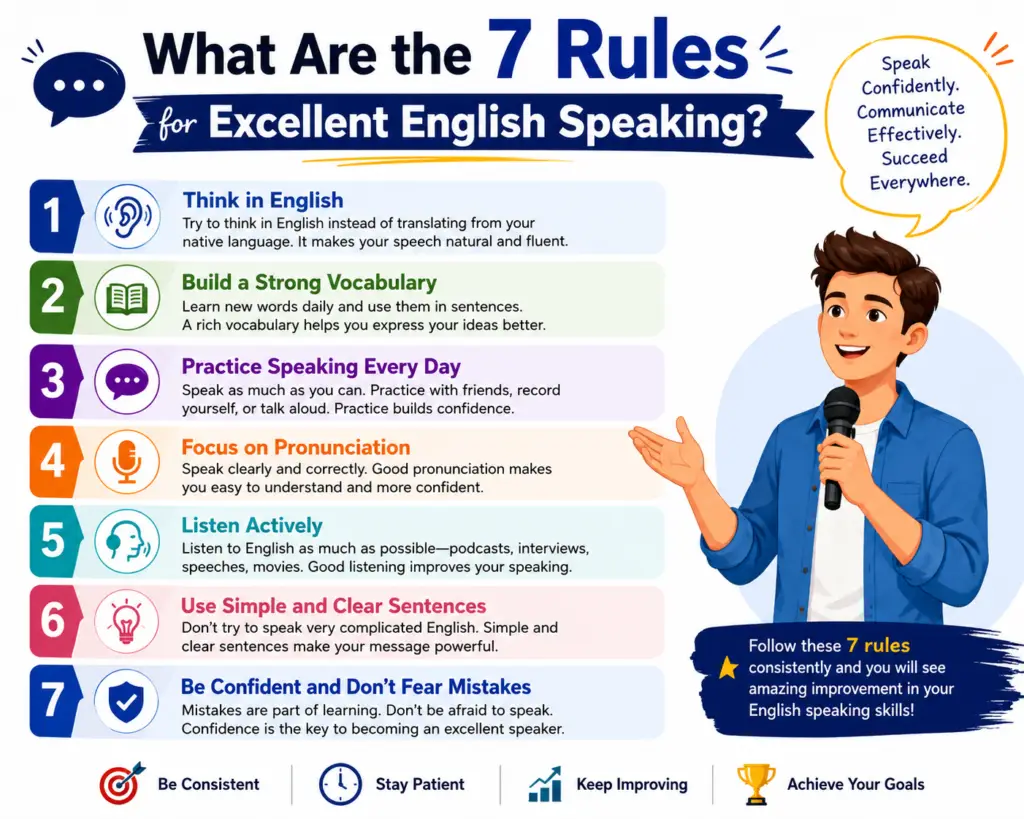
Many learners struggle with speaking because they focus too much on perfection instead of communication. The good news is that by following a few simple principles, anyone can improve their spoken English. Here are the 7 rules for excellent English speaking that can help you become a fluent and confident communicator.
1. Speak English Every Day
The first and most important rule is consistent practice. Speaking English for just a few minutes daily can significantly improve your fluency over time.
Many learners spend hours reading and writing but rarely practice speaking. Language is a skill, and like any skill, it improves with regular use. Try speaking English with friends, family members, tutors, or even yourself in front of a mirror.
Daily speaking practice helps you:
- Build confidence
- Improve pronunciation
- Think faster in English
- Reduce hesitation
Remember, consistency is more important than perfection.
2. Focus on Communication, Not Perfection
One of the biggest mistakes English learners make is being afraid of making mistakes. They often stay silent because they worry about grammar errors or incorrect pronunciation.
Excellent English speakers understand that communication is the primary goal. Even native speakers make mistakes sometimes. Instead of focusing on speaking perfectly, focus on expressing your ideas clearly.
When you communicate regularly, your accuracy naturally improves over time. Confidence grows when you stop fearing mistakes and start using the language actively.
3. Expand Your Vocabulary Daily
A strong vocabulary allows you to express yourself more effectively. Learning new words every day can significantly improve your speaking ability.
Instead of memorizing long word lists, learn words in context. Read articles, watch videos, listen to podcasts, and note down useful words and phrases.
To remember vocabulary better:
- Learn 5–10 new words daily
- Use new words in conversations
- Create example sentences
- Review regularly
The more words you know, the more confidently you can communicate.
4. Improve Your Pronunciation
Good pronunciation helps others understand you clearly. You do not need to sound exactly like a native speaker, but your speech should be understandable and clear.
You can improve pronunciation by:
- Listening to native speakers
- Watching English movies and TV shows
- Repeating sentences aloud
- Practicing difficult sounds
Pay attention to word stress, intonation, and sentence rhythm. Listening and repeating are among the most effective ways to develop natural pronunciation.
5. Think in English
Many learners translate sentences from their native language into English before speaking. This habit slows down communication and creates hesitation.
To become a fluent speaker, start thinking directly in English. Practice describing your surroundings, daily activities, or future plans in English without translating.
For example:
- “I need to finish my work today.”
- “I am going to the market later.”
- “The weather is nice today.”
The more you think in English, the faster and more natural your speaking becomes.
6. Listen More to Speak Better
Listening is a crucial part of language learning. Excellent speakers are usually excellent listeners.
When you listen to English regularly, you naturally learn:
- Correct pronunciation
- Sentence structure
- Common expressions
- Natural speaking patterns
Useful listening resources include:
- English podcasts
- Audiobooks
- YouTube channels
- News broadcasts
- English movies and series
Try active listening by repeating phrases and copying the speaker’s pronunciation. This technique helps improve both listening and speaking skills simultaneously.
7. Build Confidence Through Practice
Confidence plays a major role in successful communication. Many people know English grammar and vocabulary but struggle to speak because they lack confidence.
You can build confidence by:
- Participating in conversations
- Joining speaking groups
- Practicing with tutors
- Recording your voice
- Celebrating small improvements
The more you speak, the more comfortable you become. Confidence grows from experience, not from waiting until you feel completely ready.
Common Mistakes to Avoid
While improving your English speaking skills, avoid these common mistakes:
Fear of Making Mistakes
Mistakes are part of the learning process. Learn from them instead of avoiding conversations.
Memorizing Without Practice
Learning vocabulary and grammar is important, but speaking practice is essential.
Speaking Too Fast
Focus on speaking clearly rather than quickly. Clear communication is more important than speed.
Ignoring Listening Practice
Listening and speaking work together. Regular listening improves overall communication skills.
Giving Up Too Soon
Language learning takes time. Stay patient and consistent.
Benefits of Excellent English Speaking Skills
Developing strong English speaking abilities offers many advantages:
- Better academic performance
- Improved job opportunities
- Greater confidence in interviews
- Easier international communication
- Enhanced professional growth
- Stronger social and networking skills
In today’s global world, effective English communication is a valuable skill that can help you succeed in both personal and professional life.
Conclusion
The 7 rules for excellent English speaking are simple yet highly effective: speak daily, focus on communication, expand your vocabulary, improve pronunciation, think in English, listen actively, and build confidence through regular practice. By following these rules consistently, you can develop fluency, accuracy, and confidence in spoken English.
Remember that becoming an excellent English speaker is a journey, not a race. Stay committed, practice regularly, and keep learning. With patience and dedication, you will notice significant improvements in your English speaking skills and communicate more confidently in any situation.