
In today’s digital world, a website is often the first impression customers have of a business. A well-designed website not only looks attractive but also provides a seamless user experience, improves search engine rankings, and helps achieve business goals. Whether you are building a personal portfolio, an e-commerce store, or a corporate website, understanding the web design process is essential.
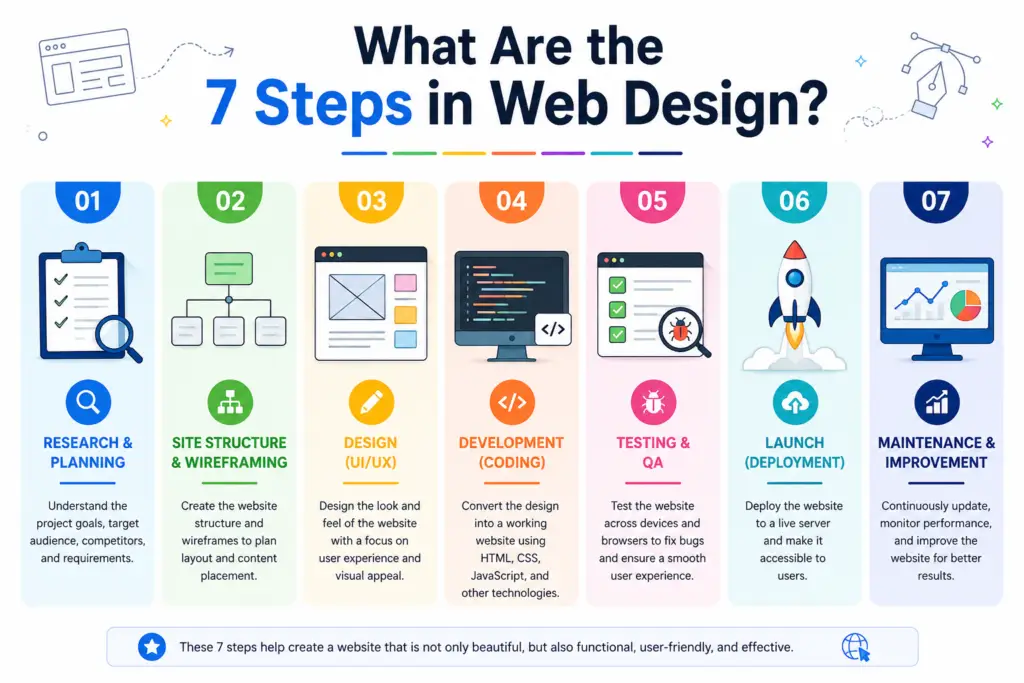
So, what are the 7 steps in web design? Let’s explore each stage in detail.
1. Define the Website Goals
The first step in web design is understanding the purpose of the website. Before creating any layouts or designs, it is important to determine what the website is intended to achieve.
Common website goals include:
- Generating leads
- Selling products online
- Providing information
- Building brand awareness
- Showcasing a portfolio
- Offering customer support
Identifying the target audience is equally important. Understanding visitors’ needs helps designers create a website that delivers relevant content and a better user experience.
2. Conduct Research and Planning
Once the goals are defined, the next step is research and planning. This stage involves analyzing competitors, industry trends, and user expectations.
Key planning activities include:
- Competitor analysis
- Audience research
- Content planning
- Keyword research for SEO
- Feature identification
Proper planning ensures that the website structure aligns with business objectives and user needs. It also helps avoid costly changes later in the development process.
3. Create the Website Structure (Sitemap)
A sitemap acts as the blueprint of a website. It outlines all pages and shows how they are connected.
Typical sitemap pages include:
- Home
- About Us
- Services
- Blog
- Contact
- FAQ
A well-organized sitemap improves navigation and helps both users and search engines understand the website structure. This step lays the foundation for an effective user journey.
4. Design Wireframes and Layouts
Wireframing is the process of creating a visual outline of the website before adding colors, images, and branding elements.
A wireframe typically shows:
- Header placement
- Navigation menus
- Content sections
- Buttons and calls-to-action
- Footer elements
Wireframes allow designers and clients to review the website’s functionality and structure before investing time in detailed design work. This helps ensure that every page serves its intended purpose.
5. Develop the Visual Design
After wireframes are approved, designers begin creating the visual appearance of the website.
This stage includes:
- Choosing color schemes
- Selecting typography
- Designing graphics
- Adding branding elements
- Creating responsive layouts
The visual design should reflect the brand’s identity while maintaining usability and readability. A professional design helps establish trust and encourages visitors to stay longer on the website.
Modern web design also focuses on mobile responsiveness since a significant percentage of users access websites through smartphones and tablets.
6. Website Development and Content Integration
Once the design is finalized, developers transform the design into a functional website using coding languages and content management systems.
Development tasks may include:
- Front-end development
- Back-end development
- Database integration
- CMS setup
- Contact forms
- E-commerce functionality
At this stage, website content such as text, images, videos, and blog posts is also added. High-quality content is crucial for engaging visitors and improving SEO performance.
The website should be optimized for speed, security, and usability during development.
7. Testing, Launch, and Maintenance
Before launching the website, thorough testing is essential to ensure everything works correctly.
Testing typically covers:
- Mobile responsiveness
- Browser compatibility
- Page speed
- Form functionality
- Broken links
- Security checks
After successful testing, the website is launched and made available to the public.
However, web design does not end after launch. Ongoing maintenance is necessary to keep the website secure, updated, and performing efficiently. Regular updates, backups, content additions, and SEO improvements help maintain long-term success.
Why Following These 7 Steps Matters
A structured web design process offers several benefits:
- Better user experience
- Improved website performance
- Stronger brand image
- Higher search engine rankings
- Increased conversions
- Easier maintenance
Skipping any of these steps can lead to poor functionality, lower engagement, and missed business opportunities.
Conclusion
Understanding what are the 7 steps in web design helps businesses create websites that are attractive, functional, and effective. The process begins with defining goals and planning, followed by creating a sitemap, wireframes, visual designs, development, and thorough testing before launch.
By following these seven essential steps, businesses can build websites that not only look professional but also deliver a positive user experience and support long-term growth. Whether you’re creating a new website or redesigning an existing one, a structured web design approach is the key to online success.