
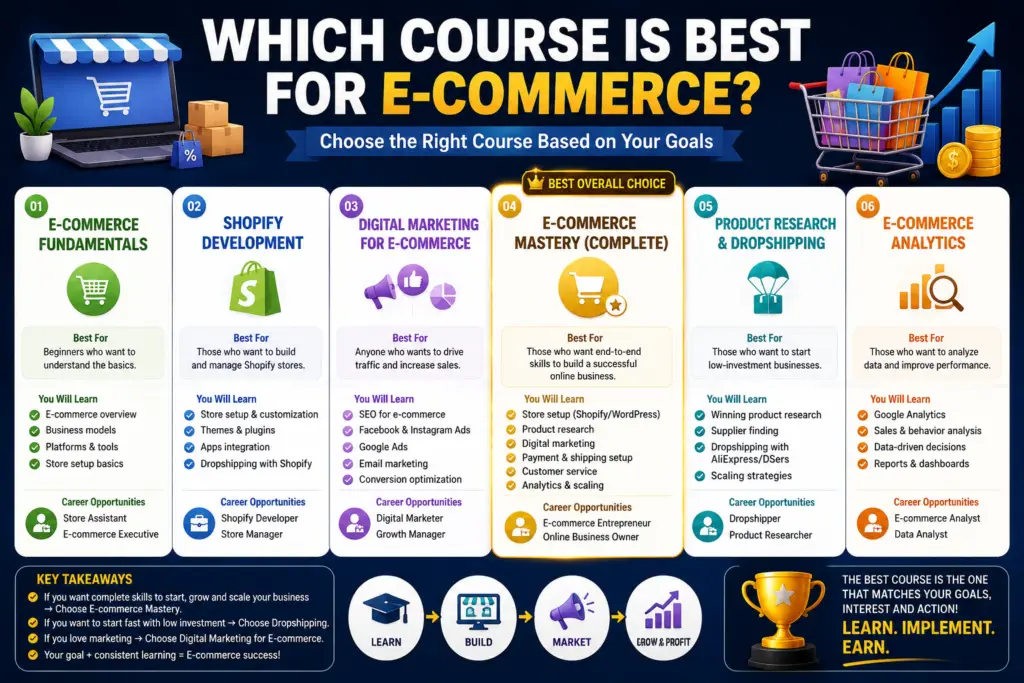
E-commerce has become one of the fastest-growing industries in the world. Businesses of all sizes are moving online, creating a strong demand for skilled professionals who can manage online stores, digital marketing campaigns, customer experiences, and online sales strategies. If you are planning to start a career in e-commerce or launch your own online business, choosing the right course is the first step toward success.
In this article, we will explore the best courses for e-commerce, the skills they teach, and how to select the right program based on your goals.
Understanding E-commerce
E-commerce refers to buying and selling products or services through the internet. Popular online marketplaces and business websites have transformed how consumers shop and how companies operate.
A successful e-commerce business requires knowledge in multiple areas, including:
- Online store management
- Digital marketing
- Search Engine Optimization (SEO)
- Social media marketing
- Product listing and management
- Customer service
- Analytics and reporting
- Payment systems
- Logistics and inventory management
Because e-commerce combines several business functions, the best course depends on your career objectives.
Best Courses for E-commerce
1. E-commerce Management Course
An E-commerce Management Course is often considered the most comprehensive option for beginners.
What You Learn
- Fundamentals of e-commerce
- Online business models
- Product sourcing
- Website management
- Customer relationship management
- Order fulfillment
- Inventory management
Who Should Take It?
- Beginners
- Aspiring online entrepreneurs
- Business owners
- Students interested in online business careers
This course provides a complete overview of how online businesses operate.
2. Digital Marketing Course
Digital marketing is one of the most valuable skills in e-commerce because traffic and sales depend on effective marketing strategies.
Topics Covered
- Search Engine Optimization (SEO)
- Social Media Marketing
- Google Ads
- Email Marketing
- Content Marketing
- Conversion Optimization
Benefits
Digital marketing helps e-commerce businesses attract customers, increase sales, and build brand awareness.
This course is ideal for anyone who wants to promote products online and grow an e-commerce store.
3. SEO Course
Search Engine Optimization is essential for generating free traffic from search engines.
Skills You Learn
- Keyword research
- On-page SEO
- Technical SEO
- Link building
- Content optimization
- E-commerce SEO strategies
Why It Matters
Many successful online stores receive thousands of visitors through organic search. Learning SEO can reduce advertising costs and improve long-term profitability.
4. Shopify Course
Shopify is one of the world’s most popular e-commerce platforms.
Course Topics
- Store setup
- Theme customization
- Product management
- Payment gateway integration
- Order processing
- Store optimization
Best For
- Entrepreneurs
- Small business owners
- Dropshipping beginners
A Shopify course can help you launch an online store quickly without advanced technical skills.
5. Amazon Seller Course
Selling on Amazon is a popular way to enter e-commerce.
What You Learn
- Product research
- Amazon FBA
- Product listing optimization
- Advertising strategies
- Inventory management
- Customer reviews management
Career Opportunities
- Amazon Virtual Assistant
- Amazon Store Manager
- E-commerce Consultant
- Online Seller
This course is suitable for people who want to build an Amazon-based business.
6. Dropshipping Course
Dropshipping allows you to sell products without holding inventory.
Key Topics
- Product sourcing
- Supplier management
- Store creation
- Marketing campaigns
- Order fulfillment
- Customer support
Advantages
- Low startup costs
- Flexible business model
- Easy to scale
Many beginners choose dropshipping because it requires less upfront investment than traditional retail businesses.
7. Web Development for E-commerce
Understanding website development can give you a significant advantage in e-commerce.
Skills Covered
- Website creation
- HTML and CSS basics
- User experience design
- Website optimization
- Mobile responsiveness
Why Learn It?
A well-designed website improves customer experience and increases conversions.
8. Data Analytics Course
Successful e-commerce businesses rely heavily on data-driven decisions.
Topics Included
- Google Analytics
- Customer behavior analysis
- Sales tracking
- Conversion metrics
- Reporting dashboards
Benefits
Analytics helps businesses identify opportunities, improve performance, and maximize profits.
Which Course Is Best for Beginners?
If you are completely new to e-commerce, an E-commerce Management Course is generally the best choice because it covers multiple aspects of online business.
However, combining it with a Digital Marketing Course can provide even better results because marketing skills are essential for generating sales.
A recommended learning path is:
- E-commerce Management Course
- Digital Marketing Course
- SEO Course
- Shopify or Amazon Seller Course
- Analytics Training
This combination creates a strong foundation for building and growing an online business.
Which Course Is Best for Getting a Job?
If your goal is employment rather than starting a business, the following courses offer strong career opportunities:
Digital Marketing Course
Jobs include:
- Digital Marketing Executive
- SEO Specialist
- Social Media Manager
- PPC Specialist
Amazon Virtual Assistant Course
Jobs include:
- Amazon VA
- Product Research Specialist
- Listing Optimization Expert
E-commerce Management Course
Jobs include:
- E-commerce Executive
- Online Store Manager
- Marketplace Specialist
- Operations Coordinator
Skills Every E-commerce Professional Needs
Regardless of the course you choose, focus on developing these essential skills:
- Communication skills
- Customer service skills
- Digital marketing knowledge
- Analytical thinking
- Problem-solving abilities
- Product management
- Sales strategies
- Time management
Employers and business owners value practical skills as much as certifications.
How to Choose the Right E-commerce Course
Before enrolling, consider:
Your Career Goal
Do you want to:
- Start an online business?
- Work for an e-commerce company?
- Become a freelancer?
- Manage online marketplaces?
Your answer will determine the most suitable course.
Course Content
Choose a course that includes practical projects, real-world examples, and hands-on training.
Instructor Experience
Learn from professionals with actual e-commerce experience.
Updated Curriculum
The e-commerce industry changes rapidly. Make sure the course covers current tools, platforms, and strategies.
Conclusion
There is no single best course for everyone in e-commerce. The ideal choice depends on your goals. For beginners, an E-commerce Management Course offers the most complete introduction to online business. If your focus is driving traffic and sales, a Digital Marketing Course and SEO Course are excellent options. Those interested in online selling can benefit from Shopify, Amazon Seller, or Dropshipping courses.
The most successful e-commerce professionals often combine multiple skills, including marketing, analytics, store management, and customer service. By selecting the right course and continuously improving your knowledge, you can build a rewarding career or create a profitable online business in the growing world of e-commerce.